A microwave that heats slowly needs careful checks, not risky dismantling.
Weak heating is different from no heating
A microwave that warms food slowly, leaves cold patches or produces inconsistent results can be frustrating. Sometimes the explanation is a power setting, food quantity or unsuitable container. In other cases, a component is failing. This guide focuses on weak and inconsistent heating; our existing microwave not heating guide covers a machine that runs but fails to heat altogether.
How microwave heating normally works
A microwave oven produces electromagnetic energy that interacts with water and other molecules in food. Heating is not perfectly uniform, which is why stirring, rotating and standing time matter. The displayed cooking time assumes particular conditions, including food amount, starting temperature and selected power. A frozen meal and a small room-temperature portion will not warm at the same rate. Follow the food manufacturer's directions and check the centre of the food before serving.
First check the power level
Many microwave ovens remember the previous programme or allow reduced power for defrosting and gentle cooking. A low setting can make an otherwise functioning microwave seem weak. Review the display and manual, cancel the current programme and select the appropriate power setting for your food. Do not use maximum power indiscriminately: follow the manufacturer's instructions, particularly for delicate foods and liquids.
Food quantity, shape and starting temperature
Large portions take longer than small ones, and dense food may heat unevenly. Food taken straight from the fridge or freezer starts colder. Spread food evenly in a microwave-safe dish, cover or vent it as the food instructions require, stir where appropriate and allow standing time. Check that the centre is adequately heated before eating. Do not rely solely on a warm plate or hot edges as evidence that the whole portion is safe.
Use a microwave-safe container
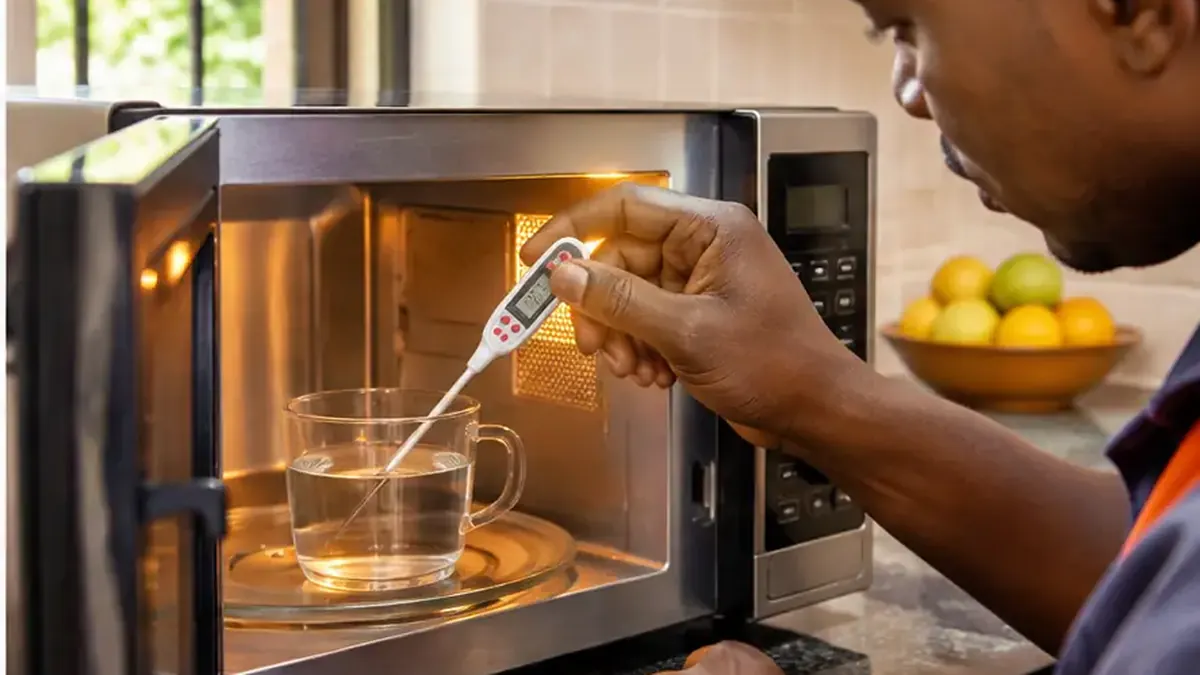
Some containers interfere with heating or become dangerously hot. Use cookware marked microwave-safe and follow the manufacturer's guidance. Avoid metal and metallic trim unless your particular oven's instructions expressly permit a supplied accessory. Never operate the oven empty. If a container sparks, stop the programme immediately and follow the manual. Do not put a thermometer with metal components into a running microwave unless it is specifically designed and approved for that use.
Check the door and interior without dismantling anything
Inspect the accessible door seal area for food debris and make sure the door closes normally. Clean the cavity according to the manual after unplugging and allowing it to cool. A damaged door, bent hinges, faulty latch or visibly compromised seal requires professional attention; stop using the oven. Never defeat a door switch or attempt to test microwave leakage with improvised methods.
Turntable and food positioning
Where the model uses a turntable, check that the glass tray and roller ring are seated correctly and can move freely. A stalled turntable may worsen uneven heating even if the heating system still works. Some inverter or flatbed models operate differently, so follow the manual rather than assuming every microwave should rotate. Do not remove protective internal covers.
When weak heating suggests a technical fault
If normal settings, portions and cookware no longer produce the usual results, a technical issue is possible. High-voltage components, the magnetron, power supply, sensors or control electronics can affect heating performance. These are possibilities rather than a remote diagnosis. The oven may appear to work while a dangerous internal fault exists. Never remove the cabinet or touch internal components: capacitors can retain hazardous electrical energy even after the appliance is unplugged.
Why internal microwave repairs are not DIY work
Microwave ovens combine mains electricity, high-voltage circuitry and a system designed to contain microwave energy. Internal testing and repair require appropriate equipment and training. Online videos showing capacitor discharge or magnetron replacement are not a safe substitute for professional service. If the oven sparks repeatedly, smells burnt, makes unusual loud noises, has a damaged door or trips the supply, stop using it and seek qualified help.
Repair or replace in Harare?
The decision depends on the diagnosis, age, overall condition, parts availability and a clear quotation. A straightforward external or mechanical issue may be worth addressing; major internal component failures can be more expensive. Ask what has been diagnosed, whether the proposed part is appropriate and what the total work entails. Do not assume regassing, software resets or generic 'power boosts' can restore microwave heating.
Frequently asked questions
Why is food hot outside but cold inside? Portion thickness, initial temperature, food composition and uneven energy distribution can all contribute; stir and allow standing time.
Does a spinning turntable prove the oven heats properly? No. The turntable and heating systems perform different functions.
Can I keep using a weak microwave? If heating is persistently abnormal or there are signs of damage, stop using it until assessed.
Can I replace the magnetron myself? No. Internal high-voltage microwave repairs should be handled by qualified technicians.
Request a microwave assessment in Harare
If your microwave has become noticeably slower, heats inconsistently or shows warning signs, describe the symptoms and model to a repair specialist. Explore microwave repair services in Harare or contact City Appliance Repairs to discuss an assessment. For a microwave that does not heat at all, see our separate no-heat troubleshooting article.