Fridge repair preparation: Preparing for a fridge repair visit in Harare: Preparing for a fridge repair visit does not need to take long, but doing a few simple things beforehand can make a real difference to how smoothly the job goes. When the technician arrives to find clear access, a defrosted unit (where relevant) and the fault details ready, they can diagnose and fix the problem faster — which means less time without a working fridge for you.
Why preparation helps the technician work efficiently
A fridge repair technician carries tools and replacement parts, but they rely on you to have the appliance accessible and ready. Obstacles, a fridge packed with food, or a thick layer of ice can all slow the job down significantly. In some cases, a technician cannot safely complete a repair without adequate space or a defrosted evaporator, meaning a second visit becomes necessary.
A few minutes of preparation on your side saves time for everyone and reduces the chance of your food spoiling while the fridge is out of action.
Safely storing food before the appointment
Do you need to empty your fridge before a repair technician arrives? Not always — but it depends on the fault. If the technician needs to tilt, move or disconnect the fridge, or if the repair involves the interior compartment, shelving or evaporator, an empty fridge is much easier to work on. When in doubt, it is safer to remove food than to leave it.
Practical steps for food storage
- Use a cooler box or insulated bag for perishables such as meat, dairy and cooked food.
- Ask a neighbour or family member if you can use their fridge for a few hours if you have a large amount of food.
- Check what is in the freezer compartment — frozen food can stay cold for a couple of hours in a sealed freezer if you keep the door shut, but plan ahead if the repair is likely to take longer.
- Remove all items from the door shelves and any loose drawers so the technician can move the appliance without things falling out.
Even if the fault is something the technician can address without moving the fridge, an uncluttered interior makes inspection much easier.
Clearing space around and behind the fridge
How much space does a technician need to access a fridge? As a general guide, aim for at least half a metre of clear space on each side and ideally a full metre behind the unit. The technician will need to pull the fridge away from the wall to reach the compressor, condenser coils and refrigerant lines at the back.
What to move before the technician arrives
- Pull the fridge slightly away from the wall yourself if it is safe to do so — this saves time and avoids scuffing your floor during the visit.
- Remove any items stored on top of the fridge.
- Clear the floor area around the fridge of bags, boxes, chairs or anything else that limits movement.
- If the fridge is in a tight kitchen alcove, check whether adjacent cupboard doors can open fully — the technician may need that clearance.
Good access is not just about speed; it is also a safety matter. Working in a cramped space increases the risk of accidental damage to the appliance or the surrounding cabinetry.
Defrosting if ice build-up is part of the problem
Should you defrost your fridge before a repair visit? If excessive ice build-up is the fault you have reported — or if you have noticed heavy frost on the evaporator or freezer walls — then yes, defrosting before the appointment is strongly recommended. A thick layer of ice can completely block the technician's view of and access to the evaporator coils, fan and defrost heater, all of which are common fault points.
How to defrost safely
- Switch the fridge off and unplug it from the wall socket.
- Remove all food and place towels or a shallow tray at the base to catch meltwater.
- Leave the doors open and allow the ice to melt naturally — do not use a hairdryer, heat gun or sharp implement to speed up the process, as these can damage the liner or puncture the refrigerant tubing.
- Wipe out any remaining water before the technician arrives.
If ice build-up is not part of your reported fault, there is no need to defrost. Simply leave the fridge running until the technician arrives so they can observe the fault under normal operating conditions.
Information to have ready: model number and fault history
What information should you give the technician when they arrive? The more detail you can provide, the quicker the diagnosis. Technicians often carry a range of common parts, and knowing the make and model in advance can help them come prepared.
Details to gather before the visit
- Make and model number: Usually found on a sticker inside the fridge, on the door frame or on the back panel. Write it down or take a photo.
- Age of the appliance: If you know roughly when it was purchased, mention it — older units may need different parts or approaches.
- Description of the fault: Be as specific as you can. Is the fridge not cooling at all, or just not cold enough? Is there a strange noise, and if so, where does it seem to come from? Is there water pooling inside or underneath?
- When the problem started: Did it come on suddenly or gradually? Did anything happen around the same time — a power surge, a move, or a change in how the fridge was loaded?
- Any previous repairs: If the fridge has been repaired before, let the technician know what was done and when.
You do not need to diagnose the fault yourself — that is the technician's job. But a clear account of what you have observed saves time and helps them focus on the most likely causes.
What to expect during a fridge diagnosis visit
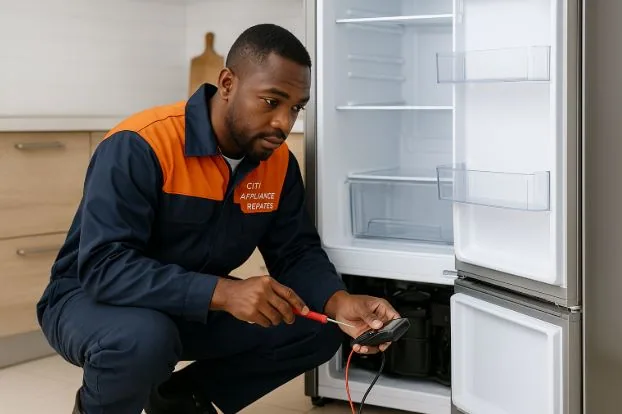
A typical fridge repair visit begins with the technician asking you to describe the fault and then carrying out a visual and functional inspection. They will check the compressor, condenser and evaporator, test the thermostat and controls, and listen for unusual sounds. If the fault involves the refrigerant circuit, they will use specialist equipment to check pressures and identify leaks.
Depending on the fault, the technician may be able to complete the repair on the same visit. In some cases — for example, if a specific part needs to be sourced — a follow-up appointment will be arranged. The technician will explain what they have found and what is needed before any work proceeds.
Having the fridge accessible, defrosted where necessary, and the fault details ready means this process can begin immediately rather than being delayed by avoidable obstacles.
A quick pre-visit checklist
- ☐ Food removed or safely stored in a cooler
- ☐ Fridge pulled slightly away from the wall
- ☐ Floor area around the fridge cleared
- ☐ Items removed from the top of the fridge
- ☐ Fridge defrosted if ice build-up is the reported fault
- ☐ Model number noted or photographed
- ☐ Fault description prepared, including when it started
- ☐ Any previous repair history noted
If you are booking a fridge repair in Harare, City Appliance Repairs can advise you on any specific preparation needed for your fault when you get in touch. Letting them know the make, model and fault description at the time of booking gives the technician the best chance of arriving ready to fix the problem on the first visit.
For professional diagnosis and repair assistance in Harare, contact City Appliance Repairs.
Frequently asked questions
Do I need to empty my fridge before a repair technician arrives?
Not always, but it is advisable if the technician needs to move or tilt the fridge, or if the repair involves the interior. Removing food and loose drawers beforehand makes the job quicker and safer.
Should I defrost my fridge before a repair visit?
Yes, if excessive ice build-up is the fault you have reported. Defrost naturally by switching the fridge off and leaving the doors open — never use a heat gun or sharp tool. If ice is not part of the problem, leave the fridge running so the technician can observe the fault.
What information should I give the technician when they arrive?
Have the make and model number ready, along with a clear description of the fault, when it started, and any previous repair history. You do not need to diagnose the problem yourself — just describe what you have observed.
How much space does a technician need to access a fridge?
Aim for at least half a metre on each side and a full metre behind the unit so the technician can safely pull it away from the wall and reach the compressor and condenser at the back. Clear the floor area and remove anything stored on top of the fridge.
Can I leave the fridge running until the technician arrives?
Yes, unless the fault involves ice build-up that needs defrosting first. Leaving the fridge running allows the technician to observe the fault under normal operating conditions, which can speed up diagnosis.