A safety-first guide to microwave heating problems, simple external checks and signs that professional diagnosis is necessary. This guide focuses on observations and manufacturer-approved checks, not opening electrical or mechanical components. It explains what different symptoms can mean, why an inspection may be necessary, and how to make an informed repair decision.
Microwave runs but food stays cold
A microwave that lights up, turns its turntable, or makes normal operating sounds may still fail to heat food. Those visible functions do not confirm that its heating system is working. Several different faults can produce the same symptom, and none can be reliably diagnosed by listening for a particular hum. Unlike many household appliances, a microwave contains high-voltage components that can retain dangerous electrical energy even after it is unplugged. This guide therefore covers external, user-level checks only. Never remove the cabinet, attempt internal testing, or try to discharge a capacitor yourself.
Start with the correct cooking setting
Before assuming a fault, confirm that the appliance is in an ordinary microwave cooking mode rather than a timer, demonstration, low-power, or defrost-only setting. Some models include a demonstration mode that makes the controls and display appear functional while disabling heating. Consult the manual for the exact indicators and procedure for your model. Check whether a power level was accidentally changed and whether the cooking time was set correctly. Do not repeatedly run an empty microwave to test it; follow the manufacturer's instructions for a suitable test load if a user-level test is recommended.
A safe way to observe heating performance
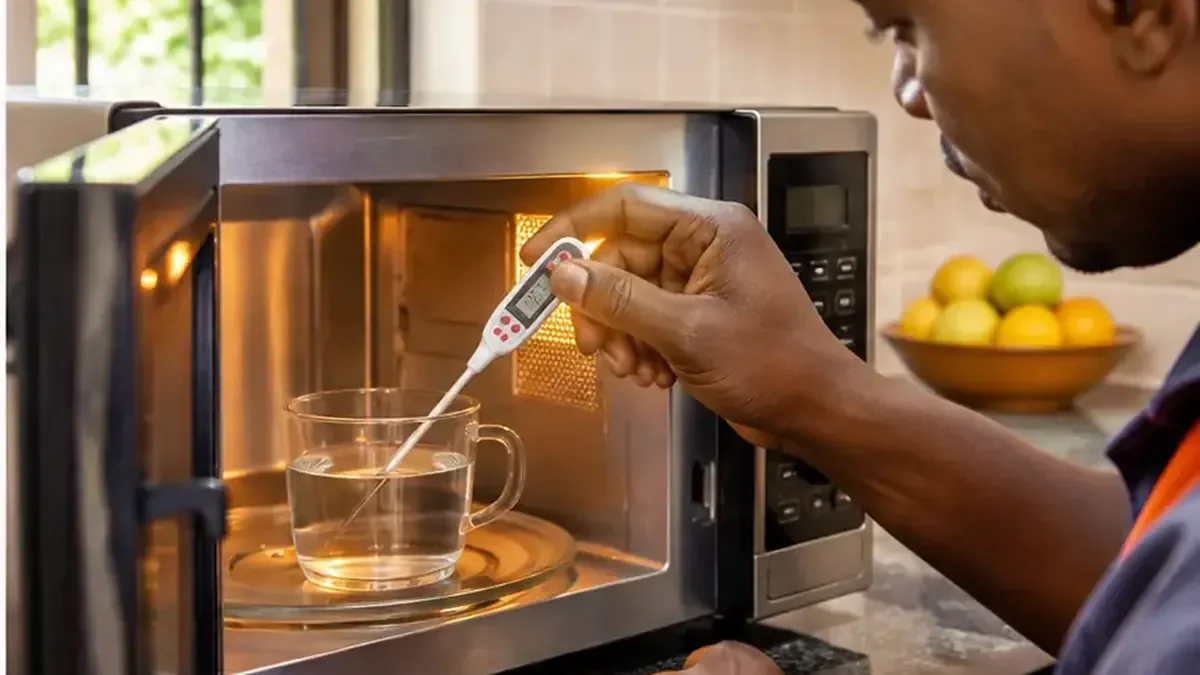
If the appliance shows no warning signs and its manual permits a simple performance check, use a microwave-safe container and an appropriate small quantity of water, following the manufacturer's guidance. Remain nearby and stop if you notice sparks, smoke, unusual smells, or abnormal sounds. Do not heat sealed containers or run the oven empty. The purpose of a basic check is only to confirm whether normal heating occurs, not to identify an internal component. If it repeatedly fails to heat, stop testing and arrange professional diagnosis rather than increasing power or cooking time indefinitely.
Check the door without dismantling anything
The door must close and latch as designed. Look for food debris around the accessible door edge and check that nothing obstructs closure. If the door is visibly bent, the latch is damaged, the seal area is compromised, or the door does not close securely, stop using the appliance. Never tape the door shut, adjust internal interlock switches, or bypass a safety mechanism. Door-switch faults cannot be safely confirmed through improvised household tests. The fact that the display illuminates does not mean the microwave is safe to operate with a damaged door.
Check the power supply safely
If the microwave is completely unresponsive, check whether the outlet has power using ordinary safe methods and whether a wall switch has been turned off. Inspect only the visible condition of the cord and plug without opening them. If the cord is frayed, the plug is damaged, the outlet is hot, or a breaker trips, stop using the microwave and seek appropriate electrical assistance. Avoid extension cords or multi-plug arrangements that do not meet the appliance manufacturer's requirements. A power interruption may reset clocks and settings, but it does not establish which component has failed.
Why internal components are not DIY projects
Microwaves use specialised high-voltage circuitry. The capacitor can retain a hazardous charge after disconnection, and the oven's internal design requires knowledge and equipment to inspect safely. Instructions that suggest opening the cover, testing a magnetron with a multimeter, checking a high-voltage diode, or discharging a capacitor are not appropriate for general household readers. A part can also appear normal visually while being defective, and incorrect reassembly can create additional electrical or radiation-related safety concerns. The safest household response to persistent heating failure is to stop using the appliance and contact a competent technician.
Sparks and arcing inside the cooking chamber
Sparks are a reason to stop the cooking cycle immediately. Sometimes food residue, unsuitable containers, metal objects, or damaged interior surfaces are involved, but the precise cause should not be guessed. Once the appliance is safely off and cool, you may inspect the accessible cooking chamber for obvious food residue or a container that should not have been used. Follow the manual's cleaning guidance. Do not operate the microwave if there is visible damage, persistent arcing, smoke, or a burning smell. Do not attempt to repair the waveguide cover or internal electrical parts without qualified assistance.
Turntable problems versus heating problems
A turntable that does not rotate can cause uneven cooking on models designed to use one, but that is not the same symptom as a microwave that produces no heat. Check that the removable plate and roller ring are correctly seated and clean, following the manual. Do not force the mechanism or operate the appliance if the plate is broken. Some microwaves are designed without turntables, so advice must be model-specific. If food remains completely cold despite correct settings, the problem requires a different investigation from a plate that simply rotates poorly.
Uneven heating and cold spots
Microwave heating can be uneven even when an appliance is functioning normally. Food shape, quantity, container material, standing time, and whether food is stirred all affect results. Follow package instructions, stir or rotate food where appropriate, and use food-safe temperature checks for meals that require thorough heating. Do not conclude that a magnetron is failing because one portion of a meal remains cold. However, a sudden, persistent reduction in heating performance across normal uses may justify a service assessment. Report the pattern accurately and avoid repeated experimental runs.
Unusual noises, smells or repeated stopping
A new grinding sound, loud buzzing, burning smell, or unexpected shutdown should be treated as a warning rather than an invitation to open the case. Stop using the appliance if there are signs of overheating, smoke, electrical damage, or persistent abnormal operation. Some noises may come from accessible turntable components, while others can involve internal systems; sound alone does not identify the cause. Note when the problem occurs, what settings were used, and whether an error code appears. Provide that information to the technician without attempting to reproduce dangerous symptoms.
Is microwave repair worthwhile?
Whether to repair or replace depends on the model, age, condition, diagnosis, part availability, and quoted cost. An inexpensive external accessory is different from a major internal heating-system repair. Ask for a clear explanation of what testing established and whether the proposed repair is appropriate. Do not rely on online prices for individual parts as an estimate of the total repair cost, which may include diagnosis, labour, compatible parts, and testing. If the microwave has a damaged door or cabinet, the safety implications should be considered alongside the economics.
Preventing avoidable problems
Use containers explicitly marked microwave-safe and follow the manufacturer's guidance about metal, foil, and accessories. Clean food splashes before they build up, but avoid soaking vents or controls. Never operate the oven empty unless the manual specifically directs a particular service procedure performed by qualified personnel. Do not block ventilation openings, and avoid running a microwave with a damaged door, plug, or cord. These habits help reduce avoidable problems, although they cannot prevent every electrical or component failure. If heating becomes unreliable, stop and seek a proper diagnosis.
How to describe the problem when requesting a repair
A clear description helps a technician plan an appropriate inspection without assuming the fault in advance. Record the appliance brand and model number from its label, the approximate age if known, the first time you noticed the problem, and whether it happens continuously or intermittently. Mention unusual sounds, smells, error messages, recent power interruptions, and any safe checks already completed. Do not dismantle the appliance to obtain a model number. A photograph of the accessible label or an error code can be useful, provided taking it does not expose you to electricity, hot surfaces, moving parts, or other hazards.
Why symptoms are not a parts diagnosis
Appliances are systems in which power supply, controls, sensors, moving components, ventilation, and mechanical parts work together. A single symptom can have several causes, and the same failed component can produce different symptoms in different models. For that reason, buying a replacement part because a website or video names it is often a poor first step. The appropriate repair depends on the specific model, the results of safe inspection, and the condition of related components. A responsible diagnosis should explain what was found and why the recommended repair addresses the actual problem.
Safety and power conditions in Harare
Power interruptions and changes in supply conditions can complicate appliance troubleshooting in Zimbabwe. However, a problem occurring after a ZESA outage does not prove that a surge caused it. Do not repeatedly reset a tripping circuit breaker or keep trying an appliance that produces sparks, smoke, a burning smell, or abnormal heat. If there is an electrical warning sign, stop using the appliance and seek appropriately qualified assistance. Never work on exposed wiring or electrical components. Where the manufacturer's manual specifies restart procedures after a power interruption, follow those instructions rather than improvised online advice.
What to expect from a professional diagnosis
A technician should first establish the symptoms and inspect the appliance in a way appropriate to its design and condition. Depending on the issue, that may include checking controls, looking for visible damage, reviewing fault codes, and carrying out tests that are not suitable for household users. Ask for an explanation of the diagnosis, the proposed work, the availability and suitability of any replacement parts, and the expected cost before approving repairs. Keep the model details and a record of previous repairs. Do not assume every fault is economical to repair; the appliance's age, condition, part availability, and repair cost all matter.
Choosing between repair and replacement
There is no universal rule that an appliance should always be repaired or always replaced after a certain age. Compare the quoted repair cost with the cost of an appropriate replacement, and consider energy use, reliability, warranty terms, expected remaining service life, and whether the original fault has been identified. A low-cost fix may be sensible on an otherwise sound appliance, while a major repair on a heavily worn machine may be less attractive. Ask for a written explanation when a costly component is recommended. Decisions should be based on evidence rather than a diagnosis inferred from one symptom.
Local repair assistance and contact details
City Appliance Repairs provides appliance diagnosis and repair services in Harare. The information here is general guidance, not a model-specific service manual or a promise that any particular fault can be repaired on the first visit. For help, call 0772 888 151 or send a WhatsApp message to 0719 888 151. Explain the appliance type, model, symptoms, and any warning signs, and ask about current service availability and charges before arranging a visit. If the appliance is still under a manufacturer's warranty, review its terms before authorising third-party work.
Related repair services and practical next steps
If the basic checks have not resolved the issue, learn more about our professional microwave repairs in Harare. You can also contact City Appliance Repairs to explain your appliance model, symptoms and service location before arranging a visit. The full appliance repair services directory covers other types of household appliances.