A washing machine leaking water is not something to ignore or work around. Depending on where the leak is coming from, it can damage flooring, create a slip hazard, or point to a fault that will worsen with every cycle. The good news is that many leaks have a straightforward cause, and a few careful checks can tell you a lot before you call anyone out.
Stop the Machine and Isolate the Water Supply First
Before you do anything else, stop the wash cycle and switch the machine off at the wall. Then turn off the water supply tap behind or beneath the machine. This is usually a quarter-turn tap on the inlet hose connection.
Do not restart the machine until you have found the source of the leak. Running a leaking washing machine risks electrical faults if water reaches internal components, and it can turn a minor seal problem into a much larger repair.
Lay down dry towels around the machine and give the area a few minutes to dry out so you can see exactly where fresh water is appearing.
Identify Where the Leak Is Coming From
Location matters. A leak from the front of the machine points to different causes than one from the back or underneath. Try to observe where water first appears:
- Front of the machine — likely the door seal or detergent drawer
- Back of the machine — usually the inlet or outlet hose connections
- Underneath the machine — often the pump, drum seal, or a split internal hose
- Top of the machine — commonly the detergent drawer or an overfilling fault
If you cannot tell where water is coming from, run a short rinse cycle with the machine pulled slightly away from the wall and watch carefully — but only do this if you are confident the leak is minor and away from any electrical components.
Door Seal Leaks: What to Look For
The rubber door seal, sometimes called the door gasket, is one of the most common sources of a leak from the front of a washing machine. Over time it can crack, tear, or collect debris that stops it forming a proper seal.
Signs of a door seal problem
- Water pooling directly below the door during or after a cycle
- Visible cracks, splits, or holes in the rubber when you inspect it closely
- Black mould or a strong mildew smell in the folds of the seal
- Small objects — coins, hair grips, buttons — lodged in the seal lip
Run your finger around the full circumference of the seal, including the inner folds. A small tear can let through a surprising amount of water. If the seal is cracked or torn, it needs replacing — cleaning alone will not fix a structural split.
Can a damaged door seal cause a washing machine to leak? Yes, absolutely. Even a small split in the gasket allows water to escape during the drum's agitation cycle, and the leak typically worsens as the rubber deteriorates further.
Detergent Drawer and Hose Connection Leaks
Detergent drawer
If water is appearing at the top front of the machine or running down the front panel, the detergent drawer is worth checking. A blocked drawer can cause water to back up and overflow rather than flush through properly. Remove the drawer completely and rinse it under a tap, clearing any compacted detergent residue from the compartments and the recess behind it.
Inlet and outlet hose connections
The hoses at the back of the machine connect the water supply and drain. Check the following:
- The rubber washers inside the inlet hose fittings — these harden and crack with age
- The hose clamps where hoses connect to the machine body — they can loosen over time
- The drain hose where it exits the machine and where it enters the standpipe or sink — look for splits or a loose fit
A dripping inlet connection is often just a worn washer, which is a straightforward fix. A split drain hose needs replacing.
Leaks From Underneath: Pump and Drum Faults
What causes a washing machine to leak from underneath? Leaks from beneath the machine are usually more serious. The most common causes are:
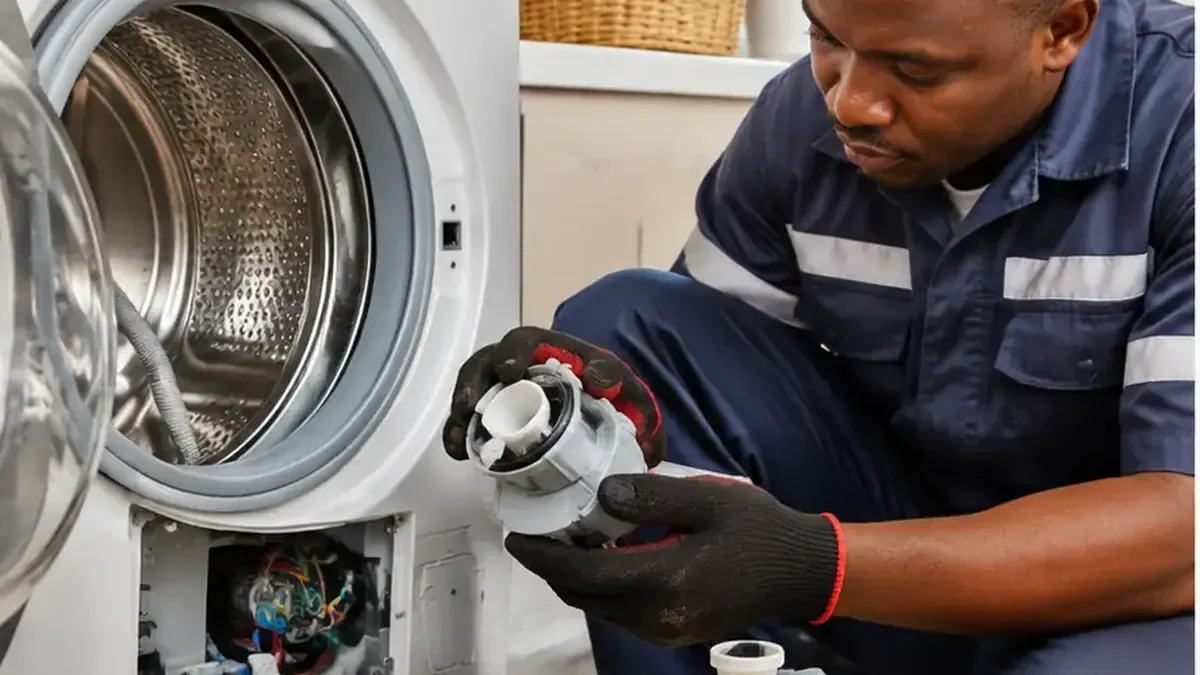
- Pump seal failure — the drain pump has a seal that can wear out, allowing water to drip from the pump housing during draining
- Drum seal or bearing failure — the seal around the drum shaft can fail, particularly if the bearings have worn (you may also notice a loud rumbling noise during the spin cycle)
- Split internal hose — hoses connecting the drum, pump, and dispenser inside the machine can crack or come loose from their clips
Leaks from underneath are difficult to diagnose without removing the machine's panels, and the repairs involved — replacing a pump, drum seal, or bearings — require the right tools and experience. Attempting these without proper knowledge risks making the fault worse or creating a safety hazard.
Overloading and Excess Detergent as Common Causes
Not every leak points to a broken component. Two very common and easily fixed causes are overloading the drum and using too much detergent.
- Overloading puts extra pressure on the door seal and can cause water to be forced past it during agitation. Check your machine's load capacity and reduce the amount of laundry if you regularly fill it to the brim.
- Excess detergent — particularly non-HE detergent in a high-efficiency machine — creates excessive foam. The foam can overflow through the detergent drawer or door seal. Use the recommended amount and, if you have a high-efficiency machine, use detergent labelled for it.
If the leak only happens on heavily loaded washes or you have recently changed detergent, try a smaller load with less detergent and see whether the problem persists.
Safe Checks You Can Do Yourself
Here is a practical summary of what you can safely inspect without specialist tools:
- Inspect the door seal visually and by touch for tears, debris, or mould build-up
- Remove and clean the detergent drawer and its recess
- Check the inlet hose connections at the back for drips and tighten gently if loose
- Inspect the drain hose for splits and confirm it is seated properly in the standpipe
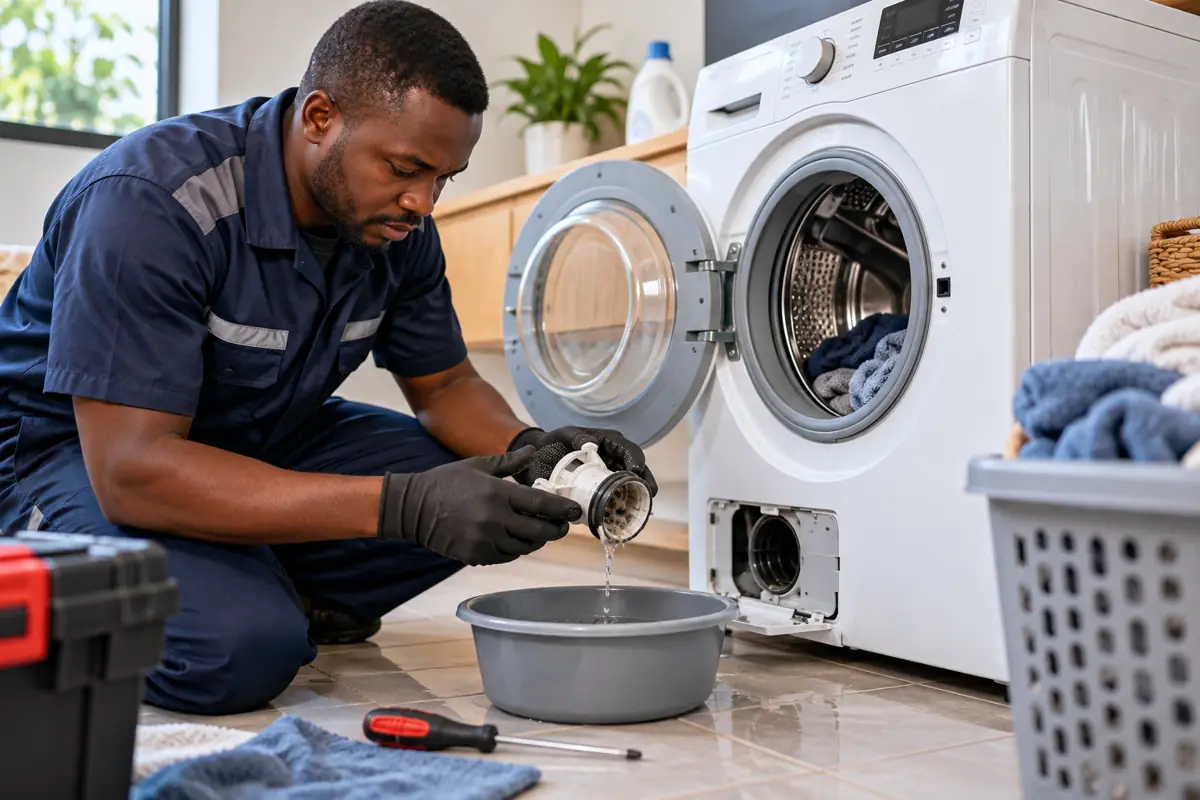
- Check the filter cover at the front bottom of the machine — a loose or cracked filter cap can leak during draining
- Reduce load size and detergent quantity and run a test cycle
Is it safe to keep running a washing machine that is leaking? No. Even a slow drip can reach electrical components, damage flooring, or worsen the underlying fault. Always identify and resolve the cause before continuing normal use.
When the Fault Needs a Professional Repair
Some leaks are straightforward to address yourself; others need a technician. Call a professional if:
- The leak is coming from underneath the machine and you cannot identify a loose hose
- The door seal is visibly torn and needs replacing
- The machine makes a loud rumbling or grinding noise during the spin — this suggests bearing failure alongside a drum seal leak
- Water is appearing near any electrical components or the control panel
- You have checked all the accessible points and cannot find the source
- The leak returns after you have already attempted a fix
Washing machine repairs that involve the pump, drum, or internal hoses require the machine to be partially dismantled. Getting this wrong can void any remaining warranty and create new faults.
If your machine is leaking and the checks above have not resolved it, City Appliance Repairs offers washing machine repairs across Harare. Get in touch with the team to arrange a diagnosis — they can identify the fault and advise on the most practical fix for your machine.
For professional diagnosis and repair assistance in Harare, contact City Appliance Repairs.
Frequently asked questions
Why is water leaking from the front of my washing machine?
A leak from the front is most commonly caused by a damaged or dirty door seal, or by water overflowing from a blocked detergent drawer. Inspect the rubber door gasket for tears or debris, and remove the detergent drawer to clear any compacted residue.
Can a damaged door seal cause a washing machine to leak?
Yes. Even a small split or crack in the door seal allows water to escape during the wash and spin cycles, and the leak typically gets worse as the rubber continues to deteriorate. A torn seal needs to be replaced, not just cleaned.
Is it safe to keep running a washing machine that is leaking?
No. Water near electrical components creates a safety risk, and continuing to run the machine can turn a minor fault into a more serious and costly repair. Switch off and isolate the water supply until the cause has been identified and fixed.
What causes a washing machine to leak from underneath?
Leaks from underneath are usually caused by a worn pump seal, a failed drum seal, worn drum bearings, or a split internal hose. These faults require the machine's panels to be removed for proper diagnosis and are best handled by a qualified technician.
Can using too much detergent cause a washing machine to leak?
Yes. Excess detergent produces too much foam, which can overflow through the detergent drawer or past the door seal. Use only the recommended quantity and ensure you are using the correct detergent type for your machine.