Air conditioner not cooling: If your air conditioner is running but not cooling the room, the fault is often something straightforward — a wrong setting, a blocked filter, or a restricted outdoor unit. Working through a few safe checks yourself can save time and, in some cases, restore cooling without any repair at all. That said, some causes are not safe to ignore or attempt to fix without proper training. This guide walks you through what you can check, what the symptoms mean, and when to stop and call a professional.
Confirm the Unit Is Set to Cooling Mode
It sounds obvious, but it is the first thing to rule out. Many split and window units have multiple modes — cooling, heating, fan-only, and dry. If the unit was switched between modes accidentally, or if a power cut reset the settings, it may be blowing air without actually cooling.
- Check the remote or control panel and confirm the mode icon shows a snowflake or the word Cool.
- Make sure the set temperature is lower than the current room temperature. If the room is already cooler than the selected target, the compressor may not need to run.
- Set the temperature a few degrees below what you feel now, wait two to three minutes, and listen for the compressor to engage — you will usually hear a low hum from the outdoor unit.
If the mode and temperature are correct and the outdoor unit is still silent, move on to the checks below.
Check and Clean the Air Filter
A dirty filter is one of the most common reasons an air conditioner stops cooling properly. The filter sits inside the indoor unit and catches dust, hair, and debris. When it becomes clogged, airflow across the evaporator coil drops sharply, and the unit cannot transfer heat out of the room effectively.
Can a dirty filter stop an air conditioner from cooling properly? Yes — a heavily blocked filter can reduce cooling output significantly and, in some cases, cause the evaporator coil to ice over, which stops cooling almost entirely.
How to clean the filter safely
- Switch the unit off at the remote and at the wall switch or isolator.
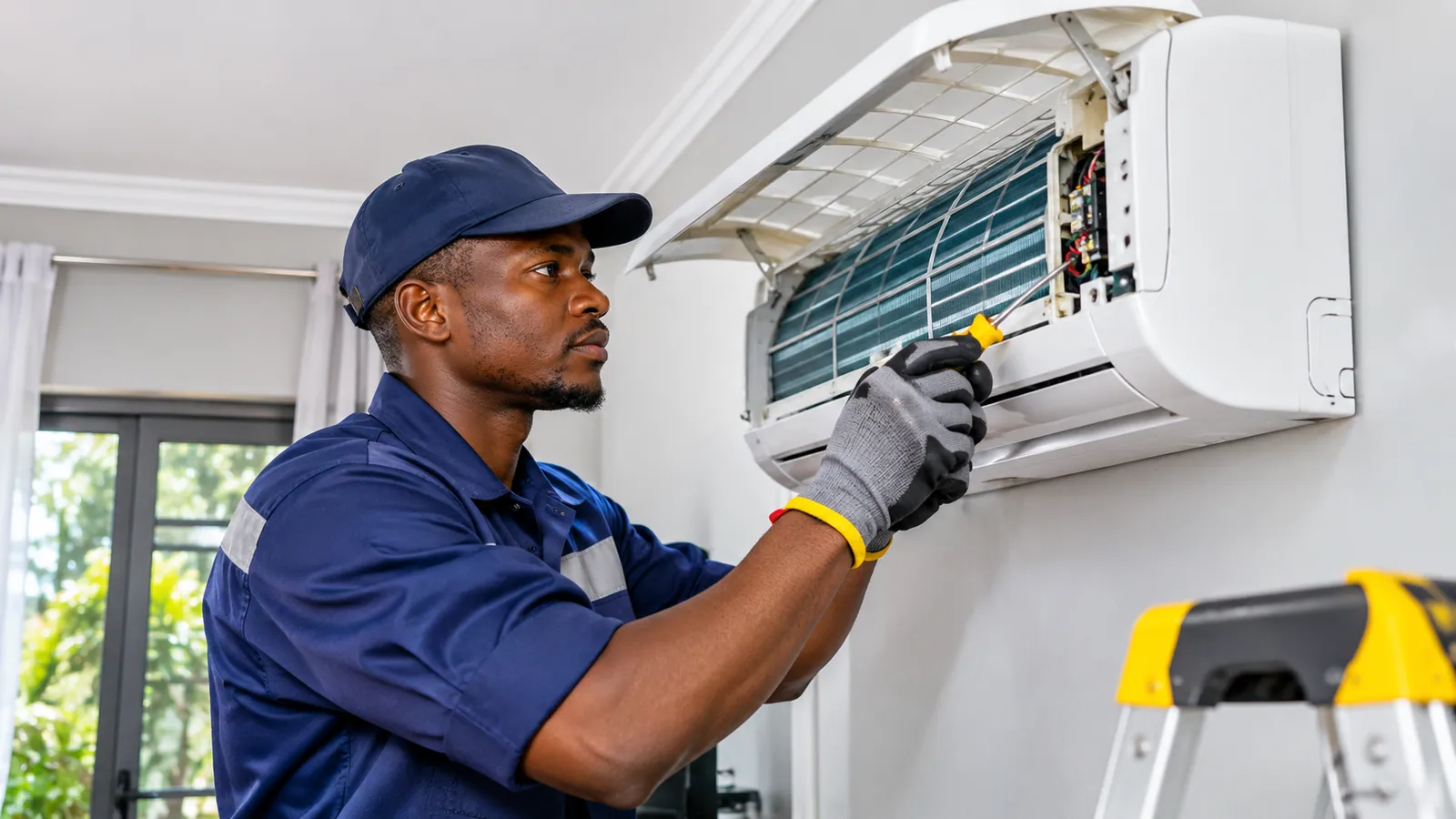
- Open the front panel of the indoor unit — most clip open without tools.
- Slide the filter out carefully.
- Tap it gently to dislodge loose dust, then rinse it under running water. Do not use harsh detergents.
- Allow it to dry completely before refitting — a wet filter can encourage mould growth.
- Refit, close the panel, and switch the unit back on.
If the filter was very dirty, allow the unit time to recover according to its manual before judging whether cooling has improved. If the coil had iced over, switch to fan-only mode for an hour first to let the ice melt, then switch back to cooling.
Inspect the Outdoor Unit for Obstructions
The outdoor condenser unit expels the heat removed from your room. If airflow around it is restricted, it cannot shed heat efficiently and cooling performance drops.
- Check that nothing is leaning against or covering the unit — garden furniture, boxes, overgrown shrubs, or debris from wind.
- Look at the metal fins on the sides of the unit. If they are visibly clogged with dust, fluff, or cottonwood seeds, airflow is restricted.
- Make sure there is clear space around the unit — at least half a metre on the sides where air is drawn in, and unobstructed space above or in front of the discharge grille.
You can gently remove loose debris by hand or with a soft brush while the unit is switched off. Do not spray water directly into the unit or bend the fins — both can cause damage.
Signs of a Refrigerant Problem
Refrigerant is the substance that actually moves heat from inside your home to the outdoor unit. If the system develops a leak, refrigerant levels drop and cooling becomes weak or stops altogether.
What are the signs that an AC unit is low on refrigerant? Common indicators include:
- The unit runs continuously but the room never reaches the set temperature.
- Ice forming on the copper pipes near the indoor unit or on the indoor coil itself.
- A hissing or bubbling sound from the indoor or outdoor unit.
- The air coming from the vents feels only slightly cool rather than cold.
- Higher than usual electricity consumption with poor results.
Refrigerant does not simply run out over time — a drop in level almost always means there is a leak somewhere in the system. Topping up refrigerant without finding and fixing the leak is a temporary measure at best. Handling refrigerant also requires specialist equipment and training; it is not a DIY task.
Electrical Supply and Remote Control Checks
Before assuming a mechanical fault, check the basics of the electrical supply.
- Remote control batteries: Weak batteries can cause erratic behaviour or prevent mode changes from registering. Replace them and try again.
- Circuit breaker: Check your distribution board. A tripped breaker will cut power to the outdoor unit while the indoor unit may still appear to run on a separate circuit.
- Isolator switch: Many outdoor units have a dedicated isolator switch on the wall nearby. Confirm it is in the on position.
- Timer settings: Some units have a built-in timer that can switch the compressor off at a set time. Check that no timer is active.
If the breaker trips again after you reset it, do not keep resetting it. A repeatedly tripping breaker points to an electrical fault that needs professional attention.
Why a Dirty Condenser Coil Reduces Cooling
The condenser coil is the network of fins and tubes on the outdoor unit. Its job is to release the heat collected from inside your home into the outside air. When the coil is coated in dust, dirt, or grime, it acts as insulation — heat cannot escape efficiently, pressure inside the system rises, and the compressor has to work harder for less result.
Over time, a dirty condenser coil can cause the compressor to overheat and shut down on thermal protection, which is why the unit may run for a while and then stop. It also shortens the lifespan of the compressor, which is the most expensive component in the system.
Cleaning condenser coils properly involves specialist coil cleaner, correct water pressure, and care not to damage the fins or electrical components. It is best left to a technician during a service visit rather than attempted without experience.
Faults That Need a Qualified Technician
Is it safe to keep running an AC that is not cooling? It depends on the cause. Running the unit with a dirty filter or wrong settings is unlikely to cause immediate damage. However, running it when the refrigerant is low, the coil is iced over, or there is an electrical fault can cause serious and expensive damage to the compressor. If you suspect any of the following, switch the unit off and book a repair.
- Refrigerant leak: Requires leak detection, repair, and a proper regas — not a DIY job.
- Compressor not starting: Could be a failed capacitor, a faulty contactor, or a compressor fault.
- Ice on the coil that returns after defrosting: Points to a refrigerant or airflow problem that needs diagnosis.
- Unusual noises: Grinding, rattling, or banging from either unit suggests a mechanical fault.
- Electrical burning smell: Switch off immediately — this is a safety issue.
- Repeatedly tripping breaker: Indicates an electrical fault requiring proper testing.
- Water leaking from the indoor unit: Can indicate a blocked condensate drain or a freezing coil.
Attempting to open refrigerant lines, test high-voltage components, or bypass safety controls without training puts both you and the unit at risk.
Next Steps
If you have worked through the checks above and your air conditioner is still not cooling, the fault is most likely something that needs proper diagnosis and tools. City Appliance Repairs handles air conditioner repairs across Harare — get in touch to describe what you are seeing and arrange a visit from a technician who can diagnose and fix the problem correctly.
For professional diagnosis and repair assistance in Harare, contact City Appliance Repairs.
Frequently asked questions
Why is my air conditioner running but not cooling the room?
The most common causes are an incorrect mode or temperature setting, a clogged air filter, a blocked or dirty outdoor unit, or low refrigerant due to a leak. Work through each check in order — the fix is sometimes as simple as cleaning the filter or correcting the thermostat setting.
Can a dirty filter stop an air conditioner from cooling properly?
Yes. A heavily blocked filter restricts airflow across the evaporator coil, which dramatically reduces cooling output. In severe cases it causes the coil to ice over, stopping cooling almost entirely. Cleaning the filter regularly is one of the most effective ways to keep an AC running well.
What are the signs that an AC unit is low on refrigerant?
Key signs include the unit running constantly without reaching the set temperature, ice forming on the indoor coil or copper pipes, a hissing or bubbling sound, and air from the vents feeling only slightly cool. A refrigerant drop almost always means there is a leak, which needs professional repair.
Is it safe to keep running an AC that is not cooling?
It depends on the cause. Running the unit with a wrong setting or dirty filter is unlikely to cause immediate harm. However, continuing to run it with low refrigerant, a frozen coil, or an electrical fault can damage the compressor — the most expensive part of the system. When in doubt, switch it off and call a technician.
What AC faults should I never try to fix myself?
Refrigerant leaks and regassing, compressor or capacitor faults, electrical faults causing a tripping breaker, and any fault producing a burning smell should always be handled by a qualified technician. These involve high-voltage components or pressurised refrigerant lines that are unsafe to work on without proper training and equipment.