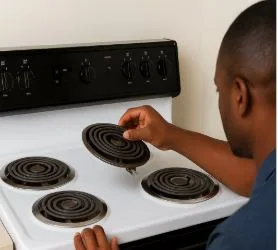
Practical, safety-first guidance for stove burners and ovens that do not heat, including what not to attempt yourself. This guide focuses on observations and manufacturer-approved checks, not opening electrical or mechanical components. It explains what different symptoms can mean, why an inspection may be necessary, and how to make an informed repair decision.
Stove not heating: identify the symptom first
An electric stove may have one burner that stays cold, several plates that heat unevenly, or an oven that does not reach the selected temperature. These are different symptoms and should not be treated as proof of the same fault. The safest starting point is to note which cooking zones are affected, whether the display or indicator lights operate, and whether the problem began after a power interruption. Do not remove panels, open the terminal block, or touch internal wiring. A stove combines mains electricity and hot surfaces, so seemingly simple DIY fixes can create serious hazards.
Check the controls and cooking mode
Verify that the correct burner or oven mode is selected and that the temperature control has not been left at its lowest setting. On some cookers, an automatic timer, child lock, or programmed cooking mode can prevent normal operation until it is reset. Consult the manual for your model rather than guessing from another brand's control layout. If an oven has separate grill, fan, and conventional modes, observe which mode is affected without dismantling anything. A control-setting mistake can look like a hardware failure, but persistent lack of heat after correct settings requires proper diagnosis.
Look for signs of an electrical supply problem
If the entire cooker is unresponsive, check whether there is a wider power interruption and whether other household circuits are operating normally. A stove may be hardwired rather than connected to an ordinary plug, so do not attempt to disconnect it or inspect the connection point. If a circuit breaker trips repeatedly, stop trying to reset it. Hot switches, scorch marks, sparks, or a burning smell are warning signs that require qualified electrical attention. Power conditions in Zimbabwe can vary, but a fault appearing after a ZESA outage does not automatically mean a voltage surge damaged an element.
One burner does not heat
A single cold cooking zone may be associated with its control, heating element, wiring, or another component depending on the design. First check that the correct control is selected and that the zone is not disabled by a lock or programmed setting. Note whether an indicator light responds and whether the problem is consistent. Do not swap heating elements, bend contacts, or open sockets. Some older coil stoves have removable elements, but that does not make improvised electrical testing safe or suitable for every model. A technician can identify the actual cause using model-specific procedures.
All burners stop working
When several cooking zones fail together, the issue may involve supply, controls, or a shared component. It is not safe to assume that every element has failed at once. Check only the user-facing settings and whether there is a known power interruption. If the stove has a visible error message, record it and consult the manual. Do not open the distribution board or attempt to bridge a suspected switch. A qualified electrician may be needed to verify the supply before an appliance technician investigates the cooker itself, especially where other electrical symptoms are present.
Oven is warm but not hot enough
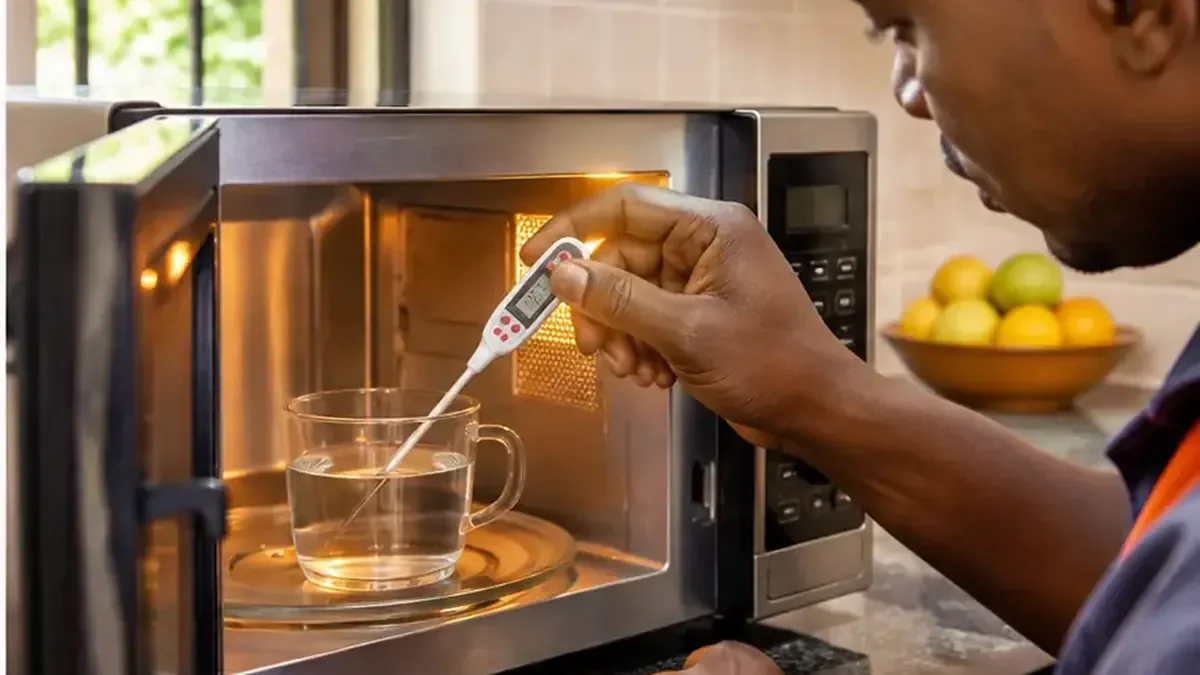
An oven that heats slowly or fails to reach its selected temperature may be affected by controls, door closure, ventilation, heating components, or temperature regulation. Make sure the selected cooking mode is correct and allow the normal preheating time specified by the manufacturer. Avoid repeatedly opening the door during the check. A separate oven thermometer can sometimes help document a temperature discrepancy, but a single reading does not diagnose the fault. Do not remove heating elements or sensors. Record the setting, approximate time, and observed behaviour to support a professional assessment.
Glass-ceramic and induction cooktops
Different cooktop technologies behave differently. An induction zone may not heat if cookware is unsuitable, incorrectly positioned, or too small for the zone, even when the cooktop itself is functional. Consult the manufacturer's cookware guidance and check for control-lock indicators. A glass-ceramic radiant zone has different operating characteristics, so do not apply induction advice to every smooth-top cooker. Never continue using a cooktop with cracked glass or visible electrical damage. Stop use and arrange appropriate inspection because damage can expose electrical components and increase the risk of shock.
Unusual heat, sparks and burning smells
An overheated control, burning smell, sparks, or smoke is not a routine troubleshooting symptom. Stop using the appliance and isolate it safely only through normal accessible controls if that can be done without danger. Do not pour water onto an electrical cooking appliance or open the casing to find the source of smoke. If there is an active fire, follow local emergency guidance and keep people away. After an electrical incident, a professional assessment is appropriate before reuse. Repeatedly turning the appliance on to see whether the smell returns can make an existing fault worse.
Cleaning and basic maintenance
Food spills and grease can affect cooking performance and create smoke, but cleaning must be carried out only when surfaces are cool and the appliance is safely off. Follow the manufacturer's instructions for removable knobs, burner surfaces, oven liners, and approved cleaners. Do not scrape electrical contacts, spray liquid into controls, or dismantle panels to remove grease. Avoid abrasive materials on surfaces where the manual prohibits them. Keeping accessible areas clean helps with ordinary maintenance but does not repair a defective switch, element, thermostat, or internal connection.
Why online resistance values are unreliable
You may find online guides claiming that a working stove element must show a particular resistance reading. Values vary with element design, rated power, supply voltage, and measurement conditions. A generic range is not a reliable household diagnostic rule. Testing internal terminals can also expose dangerous voltages or damage components if done incorrectly. Do not use a multimeter on stove internals unless you are trained and authorised to perform that work. Professional testing should use the correct service information and appropriate isolation procedures for the actual model.
When to call a stove or oven technician
Arrange a professional assessment if a burner repeatedly fails, an oven cannot reach temperature, the cooker shows recurring error codes, controls behave unpredictably, or safe user-level checks do not resolve the problem. Seek urgent electrical assistance if there is smoke, sparking, repeated breaker tripping, or evidence of overheating. Explain whether the fault affects one zone, the oven, or the entire appliance. Mention recent changes in power supply and any unusual sounds or smells, but avoid declaring a failed component based on symptoms alone.
Preventing avoidable stove problems
Use cookware suited to the cooktop and avoid placing oversized or unstable pans where the manufacturer's instructions warn against them. Keep controls and ventilation areas clean and dry, and avoid storing flammable items near hot surfaces. Allow heating zones to cool before cleaning. Follow installation and electrical supply requirements rather than using improvised adapters. If a stove has been moved or newly installed, ensure its electrical connection is handled by an appropriately qualified person. Preventive care reduces avoidable misuse, but it cannot substitute for proper diagnosis when heating performance changes.
How to describe the problem when requesting a repair
A clear description helps a technician plan an appropriate inspection without assuming the fault in advance. Record the appliance brand and model number from its label, the approximate age if known, the first time you noticed the problem, and whether it happens continuously or intermittently. Mention unusual sounds, smells, error messages, recent power interruptions, and any safe checks already completed. Do not dismantle the appliance to obtain a model number. A photograph of the accessible label or an error code can be useful, provided taking it does not expose you to electricity, hot surfaces, moving parts, or other hazards.
Why symptoms are not a parts diagnosis
Appliances are systems in which power supply, controls, sensors, moving components, ventilation, and mechanical parts work together. A single symptom can have several causes, and the same failed component can produce different symptoms in different models. For that reason, buying a replacement part because a website or video names it is often a poor first step. The appropriate repair depends on the specific model, the results of safe inspection, and the condition of related components. A responsible diagnosis should explain what was found and why the recommended repair addresses the actual problem.
Safety and power conditions in Harare
Power interruptions and changes in supply conditions can complicate appliance troubleshooting in Zimbabwe. However, a problem occurring after a ZESA outage does not prove that a surge caused it. Do not repeatedly reset a tripping circuit breaker or keep trying an appliance that produces sparks, smoke, a burning smell, or abnormal heat. If there is an electrical warning sign, stop using the appliance and seek appropriately qualified assistance. Never work on exposed wiring or electrical components. Where the manufacturer's manual specifies restart procedures after a power interruption, follow those instructions rather than improvised online advice.
What to expect from a professional diagnosis
A technician should first establish the symptoms and inspect the appliance in a way appropriate to its design and condition. Depending on the issue, that may include checking controls, looking for visible damage, reviewing fault codes, and carrying out tests that are not suitable for household users. Ask for an explanation of the diagnosis, the proposed work, the availability and suitability of any replacement parts, and the expected cost before approving repairs. Keep the model details and a record of previous repairs. Do not assume every fault is economical to repair; the appliance's age, condition, part availability, and repair cost all matter.
Choosing between repair and replacement
There is no universal rule that an appliance should always be repaired or always replaced after a certain age. Compare the quoted repair cost with the cost of an appropriate replacement, and consider energy use, reliability, warranty terms, expected remaining service life, and whether the original fault has been identified. A low-cost fix may be sensible on an otherwise sound appliance, while a major repair on a heavily worn machine may be less attractive. Ask for a written explanation when a costly component is recommended. Decisions should be based on evidence rather than a diagnosis inferred from one symptom.
Local repair assistance and contact details
City Appliance Repairs provides appliance diagnosis and repair services in Harare. The information here is general guidance, not a model-specific service manual or a promise that any particular fault can be repaired on the first visit. For help, call 0772 888 151 or send a WhatsApp message to 0719 888 151. Explain the appliance type, model, symptoms, and any warning signs, and ask about current service availability and charges before arranging a visit. If the appliance is still under a manufacturer's warranty, review its terms before authorising third-party work.
Related repair services and practical next steps
If the basic checks have not resolved the issue, learn more about our stove and oven repair services in Harare. You can also contact City Appliance Repairs to explain your appliance model, symptoms and service location before arranging a visit. The full appliance repair services directory covers other types of household appliances.