Water left in the washing machine drum after a cycle is a drainage problem. It may be caused by programme settings, a kinked external hose, a user-accessible filter or a fault requiring professional diagnosis. This guide explains safe checks for a washing machine that will not drain in Harare.
Is the problem drainage or spinning?
Look through the door after the programme stops. If water is standing inside, focus on drainage. Some washers will also refuse to spin while water remains. If the drum is empty but clothes are very wet, read our separate washing machine not spinning guide for load balance and spin programme advice.
1. Stop safely if water remains in the drum
Use the normal controls to stop the programme. Do not force open a locked door, especially if hot water could spill out. If there is a major leak, damaged cable, burning smell or electrical fault, stop using the washer and seek assistance. Keep children away from pooled water and wet electrical areas.
2. Check whether the programme intentionally holds water
Some programmes have rinse-hold or pause functions. Read the manual and check displayed settings or error codes. A power interruption can also leave a cycle unfinished. Follow your machine's instructions for resuming or cancelling a programme, rather than repeatedly unplugging and restarting it.
3. Inspect only the visible drain hose
Without pulling a heavy machine unsafely, see whether the exposed hose is kinked, crushed or trapped behind the washer. Installation height and position vary by model. Follow the manufacturer's installation manual; do not disconnect internal hoses or move the machine into an unsafe position.
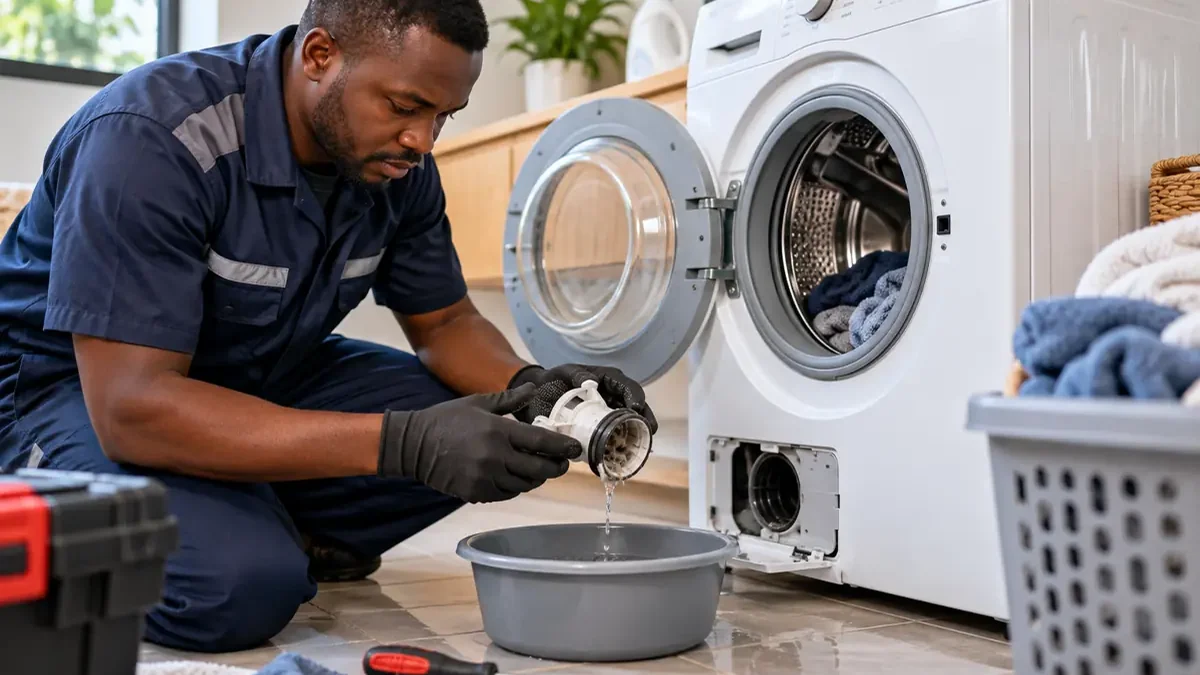
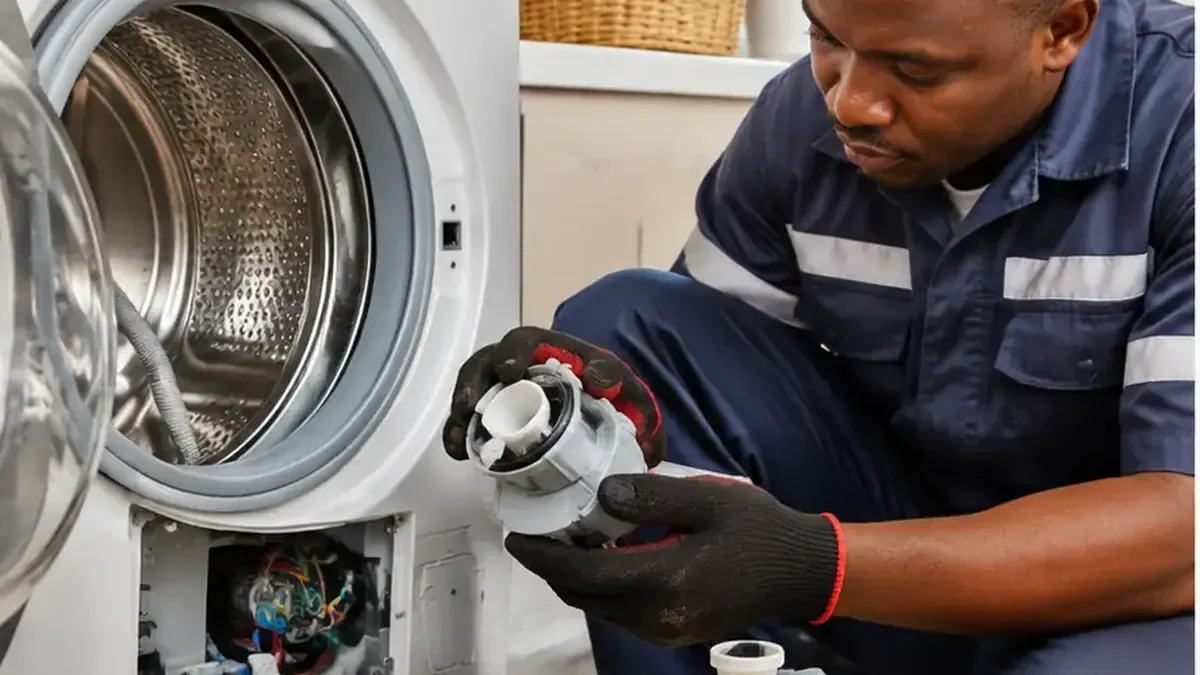
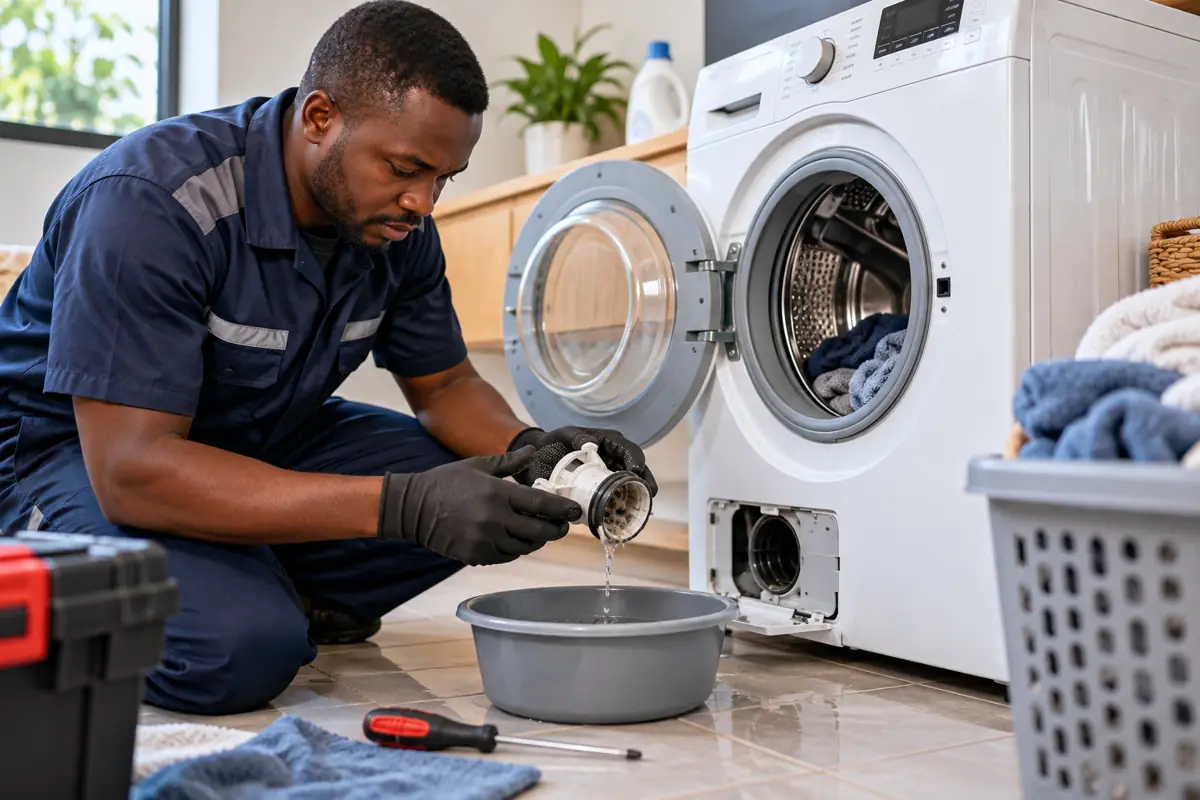
4. Check a user-accessible filter only if the manual allows it
Some machines have a filter intended for owner maintenance, where coins, lint or other objects can accumulate. Others do not. Follow the model-specific manual, including instructions to isolate power and manage residual water. Opening a filter can release a large volume of water. If the procedure is unclear or water cannot be controlled safely, leave it to a technician. Never remove panels to hunt for a filter.
5. Check for household drain backups
Water rising out of the standpipe or around a wall outlet can suggest a household plumbing restriction rather than an appliance fault. Avoid corrosive drain chemicals near appliance hoses and do not work around wet electrical fittings. Depending on the diagnosis, a plumber rather than an appliance repair technician may be needed.
Why a blocked filter is not the only explanation
A clean filter does not prove that the drain pump, internal pipework, sensor or controls are working. Sounds such as humming are clues rather than proof that a pump has failed. Replacing parts without assessing the cause may waste money. Internal testing and repairs should be handled by a trained professional.
What to tell your technician
Share the make and model, selected programme, exact error code, whether the drum retains water every time, and whether there is water backing up at the household outlet. Mention any recent power interruption or previous repairs. Do not deliberately recreate a dangerous leak or electrical fault for a video.
When should you arrange washing machine drainage repair in Harare?
If water repeatedly remains in the drum after safe checks, the machine leaks, or error codes persist, request diagnosis. City Appliance Repairs provides washing machine fault diagnosis and repair services in Harare. Visit our washing machine repair service page or contact us. Call 0772 888 151 or WhatsApp 0719 888 151. Ask about current charges and availability.
Frequently asked questions
Can a drainage failure prevent spinning?
Yes. Some machines will not spin at high speed until the water has drained.
Should I keep running drain cycles?
No, not repeatedly when the fault persists, particularly if there is leakage or an error message. Seek diagnosis instead.
Can I clean the drain filter myself?
Only if your model's manual permits owner maintenance and you can follow its instructions safely, including managing released water.
Does standing water always mean the pump has failed?
No. Settings, hose position, filters, household drainage and other internal faults can produce similar symptoms.